CUC-Anna

Care That Puts You First. How A Medical Home Supports A Healthier You.

Amanda Waterman, MD, Primary Care Physician and Regional Clinic Lead 
April 16, 2026

Having a medical home is an important part of your overall health. You may have heard of the term before, but what does it really mean and how does it benefit you?  

What is a Medical Home? 

A medical home (also known as a Patient-Centered Medical Home or PCMH) is more than just the building where you see your doctor. It’s a specific way of delivering your care. 

In a medical home, you have a dedicated team that works together to support your health in a comprehensive, accessible way. This team-based approach makes it easier for you to get the care you need, whether it’s preventative care, a sudden illness, or managing a chronic condition.  

A Better Way to Receive Your Care 

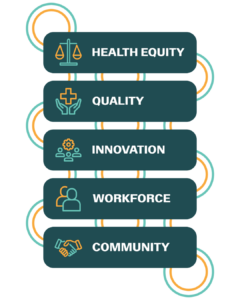
A patient-centered medical home is built around five key principles that help make your care more connected, convenient, and personalized.  

  1. Comprehensive Care 
    A medical home care team supports your physical and mental health. This includes check-ups, preventative care, treatment for illnesses, and chronic care. You’re supported by a team that may include not only your doctor but nurses, pharmacists, nutritionists, social workers, and more! All working together with you in mind.  
  2. Patient-Centered  
    This means you are at the center of everything we do. The relationships between you and your providers are built on respect and value to fully understand your unique needs. Your family and support system are also recognized by your care team and encouraged to be actively involved in your care treatment and plan.  
  3. Coordinated Care
    Your care doesn’t stop with one visit. Your team helps coordinate everything, from specialty appointments, medications, home care, hospital visits, and community resources. This means less stress for you as you transition between services and communication between you and your care team is a top priority.  
  4. Accessible Services 
    Getting care should be easy. A medical home strives to provide shorter wait times, after-hours support and multiple ways to connect with your care team including by phone, email, MyChart messaging or telehealth. 
  5. Quality and Safety 
    Your medical home care team is committed to providing safe, high-quality, and evidence-based care. They also listen to your feedback and continually look for ways to improve your experience and health outcomes for not just you but your entire community.  

Why It Matters 

When you have a medical home, you’re not just seeing a provider; you’re building a relationship with a team that knows and cares for you. This way of delivering care leads to better health, fewer gaps in care, and a more personalized experience.  

Hopefully this has helped you gain an understanding of what it means to be cared for in a medical home. As a physician, it is my honor to be part of an amazing team and to care for the needs of both individuals and the community daily. 

CommUnityCare Health Centers is dedicated to serving its Central Texas communities through the Patient-Centered Medical Home model. If you need a place where you can receive care that aligns with your needs and values, call our patient navigation center today. If you are already patient, thank you for trusting us with your care.

 A medical home is defined by the Agency for Healthcare Research and Quality (AHRQ) as a medical home not simply as a place but as a model of the organization of primary care that delivers the core functions of primary health care. 

CommUnityCare Health Centers Names Katherine T. Reyes as Chief Operating Officer 

CommUnityCare Health Centers is pleased to announce the appointment of Katherine T. Reyes as Chief Operating Officer (COO), bringing extensive healthcare leadership experience in operational strategy, growth, and organizational transformation. 

Reyes joins CommUnityCare Health Centers following a 10-month-long national search to identify a leader who could help guide the organization through its next phase of growth and operational excellence. Her arrival marks an important milestone for the organization as it continues to strengthen its leadership team and expand its ability to serve communities across Central Texas. 

“Katherine brings an exceptional track record of operational leadership and a deep commitment to building systems that support both patients and care teams,” said Dr. Nicholas Yagoda, Chief Executive Officer of CommUnityCare Health Centers. “Her experience leading large, complex healthcare organizations and fostering collaborative partnerships between clinicians and administrators will be invaluable as we continue to grow and enhance access to high-quality care across our communities.” 

Reyes is a seasoned healthcare executive with experience scaling multi-site provider networks, strengthening operations, and guiding large healthcare organizations through transformational change. 

Most recently, she served as Senior Vice President of Ambulatory Services at University Health in San Antonio, where she helped expand the ambulatory enterprise to more than 650 clinicians across 40 locations. She previously held Chief Operating Officer roles with Sutter Gould Medical Foundation and the Santa Cruz division of Sutter Palo Alto Medical Foundation, where she helped lead operational transformation initiatives, implement enterprise health record systems, and strengthen patient experience and workforce engagement. 

“CommUnityCare and Central Health have inspiring missions and dedicated teams,” said Reyes. “I am excited to join CommUnityCare as Chief Operating Officer and look forward to learning about the excellent work underway while collaborating and implementing both short- and long-term strategies to navigate and thrive in an evolving healthcare environment.” 

Reyes holds a Bachelor of Science in Healthcare Administration from San Jose State University and a Master of Arts in Organizational Management from the University of Phoenix. 

Outside of work, Reyes is a proud daughter of a career U.S. Navy sailor and the wife of a U.S. Army soldier. She enjoys exploring Texas parks with her two four-pawed dependents and frequently visits the California Bay Area to spend time with family. 

Reyes is set to join CommUnityCare Health Centers in May 2026. 

CommUnityCare Health Centers Services Begin Transitioning to New Central Health Hancock Site 

Published: March 24, 2026

Last updated: April 16, 2026 

Planning is underway to transition CommUnityCare services to Central Health Hancock, a new health care campus in Central Austin that will expand access to care for the community. 

Services will begin rolling out in phases as construction progresses and spaces become operational. Patients and community partners can expect updates as services prepare to move.

This page will serve as a central place to share the latest information throughout the transition. 

Phased Rollout of Services  

Phase 1 of relocation for CommUnityCare services includes: 

  • David Powell Clinic will begin services on April 24, 2026, at 10 a.m.
  • Pharmacy and lab services will begin operations on April 24, 2026, at 10 a.m.
  • Convenient Care services, currently operating out of the Central Health Capital Plaza Specialty Clinic, will relocate by mid-May 2026. Opening date, coming soon. 

Update on David Powell Health Center Lab Services 

Patients should be aware of a change to laboratory services at the current David Powell Health Center. 

Quest Diagnostics’ last day of patient care at David Powell Health Center is April 13, 2026. Beginning April 14, patients will need to visit another Quest Diagnostics location for lab services. Patients who need further assistance identifying the best location for lab services can speak with their care team. 

CommUnityCare recommends the following nearby Quest Diagnostics locations: 

For more Quest Diagnostics locations, visit HERE.  

About Central Health Hancock 

The Central Health Hancock site transforms the former flagship Sears building at Hancock Center into a nearly 200,000-square-foot health care campus designed to support specialty care, clinical services, and administrative operations. 

Construction on the project began in Fall 2024 and represents a significant investment in strengthening the health care safety net for Travis County residents. Once complete, the campus will expand access to care, support better coordination across services, and help reduce wait times for patients who rely on the safety-net system. 

More than just a new building, the Central Health Hancock site reflects a continued commitment to building a healthier and more equitable future for the community, creating a space designed to meet the growing needs of patients. Learn more about Hancock HERE.

Honoring the Legacy of the CommUnityCare David Powell Health Center  

For more than three decades, the David Powell Health Center has served as a cornerstone of HIV care in Central Texas. Founded in 1990 and named after HIV/AIDS advocate David Powell, the clinic has provided comprehensive medical care and support services to thousands of patients living with HIV. 

As the region grows and infrastructure projects, including the TXDOT I35 expansion, reshape the area surrounding the current clinic, the move to Hancock will allow the program to continue its legacy of care while expanding services in a modernized environment. Read more about the legacy of David Powell HERE. 

Staying Informed 

As construction continues and services begin transitioning to the Central Health Hancock site, additional updates will be shared with patients and the community.  Care will remain available at current locations until services officially transition. Phase 2 of services is anticipated to roll out in 2027. 

This page will continue to be updated as more services prepare to move to Hancock.  


CommUnityCare Health Centers Earns 2024 HRSA Operational Site Visit Badge 

CommUnityCare Health Centers has been awarded the 2024 Operational Site Visit (OSV) Badge from the Health Resources and Services Administration (HRSA), recognizing full compliance with all Health Center Program requirements following a comprehensive federal review. 

The OSV Badge is a new national recognition introduced for health centers with site visits conducted in 2024 or later. It is awarded only to organizations that demonstrate full compliance and receive no conditions on their award following an Operational Site Visit, marking the successful completion of a rigorous three-year review cycle. 

Operational Site Visits serve as an objective assessment of a health center’s clinical, financial, and operational performance. The process ensures strong stewardship of federal resources while reinforcing high standards of patient care, governance, and accountability. 

Earning the 2024 OSV Badge reflects the strength of the systems, leadership, and teams across CommUnityCare Health Centers who work every day to deliver accessible, high-quality primary care to the communities of Central Texas. 

“This recognition affirms our commitment to operational excellence and to the patients and families who trust us with their care,” said Dr. Nicholas Yagoda, CEO. “It reflects the dedication of our teams and the strong foundation that supports our mission.” 

The OSV Badge is distinct from, but related to, HRSA’s annual Community Health Quality Recognition awards, which focus on clinical performance measures. Together, these recognitions highlight both quality outcomes and compliance excellence. 

For a full breakdown of the Travis County Healthcare District / Central Texas Community Health Center HRSA data and performance metrics, visit HRSA’s program data page. 

New Clinic Availability Strengthens Access to Musculoskeletal Care 

Access to specialized musculoskeletal (MSK) care is expanding, bringing advanced joint and sports medicine services to more patients across Central Texas and reducing wait times for those seeking relief from chronic pain and injury. 

Led by Dr. Leigh Romero, CommUnityCare Provider and Dell Medical School Primary Care Sports Fellowship Director, the MSK specialty care service line treats a wide range of bone, joint and muscle conditions — from chronic arthritis to acute injuries. Services include advanced joint injections, rehabilitation planning and personalized treatment strategies tailored to each patient.  

“Sometimes it’s diagnosing the problem and creating a rehab plan — whether that’s physical therapy, home exercises or medication to manage pain,” Romero said. “Other times, it’s performing injections like steroids or gel injections. It really depends on the patient, their age and where they are in their condition.” 

By expanding MSK services across multiple locations, more patients can be seen sooner and closer to home. “Providing more MSK clinics really opens this up to an underserved population that needs it,” Romero said. 

Previously offered just one half-day per week at Southeast Health and Wellness Center, expanded clinic sessions are now available at:  

  • Southeast Health and Wellness Center 
    • Tuesday Mornings 
    • Friday Mornings (1st/3rd/5th of the month) 
  • North Central Health Center  
    • Thursday Afternoons  
  • Central Health CEC Building 
    • Mondays 
    • Wednesday Mornings 
    • Wednesday Afternoons (2nd/4th of the month) 
    • Thursday Mornings 

Keeping care within the medical home also strengthens coordination and continuity. 

“By keeping care within the medical home, patients avoid outside referrals and fragmented records,” Romero said. “Imaging, labs, medications and specialty services remain coordinated in one trusted system.” 

A Difference Patients Can Feel 

For patients like Angie Harris, 70, expanded MSK services mean quicker access to a provider she trusts. A patient of more than 40 years, Harris has been experiencing chronic pain in her shoulder due to arthritis. “I come to Dr. Romero to get my steriod shots. I depend on those shots to relieve me of my pain,” Harris said. “She takes care of me pretty good. And when I need to come in, she works me in.” 

Harris’ chronic pain being managed by through the MSK clinic, but is looking at a surgery referral for long-term relief.  

“They listen to my concerns,” Harris said. “I can see my primary care doctor here and some of the specialists. It’s all in one area — I don’t have to run across town. It’s convenient because it’s not far from my home.” 

Beyond the convenience, Harris values the relationship built over time. 

“Dr. Romero is someone you can be comfortable with,” she said. “You can communicate with her, and you feel more at home with a person like that.” 

Strengthening Access and Education 

In addition to increasing patient access, the expanded clinic strengthens hands-on training for future physicians. Twenty-one Family Medicine residents rotate through Southeast Health and Wellness Center each year, along with one Sports Medicine Fellow. 

Romero says teaching enhances the patient experience. 

“They spend time getting a detailed history and exam,” she said. “When I come in, we talk through what we’re seeing and thinking. Patients appreciate understanding what’s going on with their bodies.” 

With additional clinic sessions and expanded locations, MSK services are positioned to serve more patients, reduce barriers to specialty care and deliver timely relief — all within the medical home patients already know and trust. 

“I’m really happy we’re able to expand,” Romero said. “There’s a growing need, and it’s important patients have more openings and more places to receive this care.”

When Your Day Takes a Turn, We’re Here. Try the Video Visit Standby List. 

Camille Evans, Program Manager Telehealth Operations 
February 24, 2026

Some mornings just don’t go as planned. You wake up with a sore throat that wasn’t there yesterday. Your child spikes a fever before school. You check for appointments — and they’re already full. 

We understand. And we’re always looking for ways to make care more accessible when you need it most. That’s why CommUnityCare Health Centers offers the Video Visit Standby List, a flexible option that helps you connect with one of our providers the same day if a last-minute video appointment becomes available. 

What Is the Video Visit Standby List? 

The Video Visit Standby List may be a good option if you need care today, but no same-day appointments are available. This option is designed for established patients who: 

  • Are current patients of CommUnityCare Health Centers 
  • Have an active MyChart account 
  • Have a health concern that can safely be addressed by video 
  • Are available on short notice 

If you are experiencing a medical emergency, call 911 or go to the nearest emergency room. 

The Process is Simple: How It Works 

Getting started is easy. Simply log in to your MyChart account, go to Appointments, select the Video Visit Standby List, and follow the prompts to confirm. That lets us know you’d like to be considered if a same-day video visit becomes available. 

If an appointment opens up due to a cancellation, our team reviews the standby list and reaches out to eligible patients. If we contact you and you’re available, the appointment is yours! 

While joining the list gives you another opportunity to be seen, it’s important to remember that it doesn’t guarantee a same-day visit. Openings depend on last-minute availability and can happen at any time, sometimes with short notice. If we don’t hear back quickly, we may need to offer the appointment to another patient so the time doesn’t go unused. We truly appreciate your flexibility as we work to care for as many patients as possible. 

Video visits are scheduled with the next available provider, which may not be your regular primary care provider, but you can still expect the same quality, compassionate care you know and trust. 

Expanding Access, One Visit at a Time 

The Video Visit Standby List helps fill last-minute openings and allows us to serve more patients each day. It’s one more way CommUnityCare Health Centers is working to improve access and make care easier and more convenient for you. 

If you don’t have a MyChart account yet, sign up today! To get started, CLICK HERE.  

Small Steps, Big Changes. Your Guide to Setting Healthier Habits  

Elyse B Henson, RDN, LDN, Clinical Nutrition Manager
February 24, 2026

Setting healthy habits can feel overwhelming, especially when we’re making big changes all at once. The good news? Research shows that small, specific goals are much more likely to stick than trying to change everything at once. 

Healthy change works best when you take it one step at a time. This guide will help you set realistic goals that build momentum and lead to lasting improvements in your eating habits and physical activity. 

Why Small Goals Work 

Think of healthy habits like building a staircase — you take one step at a time. When you set small goals and achieve them, you build confidence and create routines that last. 

Studies show that people who set specific, achievable goals and track their progress are more successful than those who try to overhaul their entire lifestyle overnight. Small wins add up.

How to Set Goals That Work 

Use this simple framework to create goals that fit your life: 

  • Make it Specific: Instead of “eat healthier,” try “add one vegetable to dinner three nights this week.” 
  • Make it Measurable: Choose goals you can track, like “walk 15 minutes after lunch on Monday and Thursday.” 
  • Make it Achievable: Start where you are. If you’re not exercising now, begin with 10 minutes of movement you enjoy each day. 
  • Make it Realistic: Consider your schedule, budget, and what’s available in your neighborhood.  
  • Make it Time-Specific: Set a timeframe, such as “this week” or “for the next two weeks.”

Build Momentum and Track Your Progress 

Once you’ve met a goal consistently for two to three weeks and it feels like a habit, build on little by little. Lasting change takes time. Celebrate your wins, then take the next small step.  

To track your progress, keep it simple.  

  • Put a checkmark on your calendar when you meet your goal. 
  • Set reminders on your phone. 
  • Notice how you feel — more energy, better sleep, or improved mood. 

Ready to get started? Pick ONE goal today and begin this week. Write it down, tell a friend or family member, track your progress, and celebrate your win! If things don’t go as planned, don’t give up. Life happens. Just start again. Progress, not perfection, is what matters. 

Examples of Healthy Starting Goals 

  • “I will drink one glass of water when I wake up each morning this week” 
  • “I will add frozen vegetables to my dinner two nights this week” 
  • “I will pack my lunch the night before on Sunday and Wednesday” 
  • “I will take a 10-minute walk around my block three days this week” 
  • “I will stand up and move during TV commercials” 
  • “I will attend one free community exercise class this month” 

CommUnityCare Health Centers Nutrition Services  

Nutrition support is part of your care. Our registered dietitians work with your provider to help you build a plan that fits your life. Talk to your provider today about scheduling a visit with a dietitian. 

Why Colorectal Cancer Screening Matters – Even When You Feel Perfectly Healthy  

Era Steinfeld, MA; Senior Research Program Coordinator at Dell Medical School
Arianna Williams, MS; Community Health Worker at CommUnityCare Clinic at Black Men’s Health Clinic 
February 24, 2026

Colorectal cancer is one of the most preventable cancers, yet it remains the second leading cause of cancer deaths in the United States. March is Colorectal Cancer Awareness Month, an important reminder that regular screenings and healthy lifestyle changes can help prevent colorectal cancer and save lives. 

Understanding Colorectal Cancer 

Colorectal cancer starts in the colon or rectum, usually from small growths called polyps that can turn into cancer over time. It is one of the most common cancers, but it is also one of the most preventable with regular screening.

Many people think they do not need screening if they feel fine, but colorectal cancer often does not cause symptoms at first. Warning signs can include blood in the stool, ongoing stomach pain, changes in bowel habits, or unexplained weight loss. Screening can find problems early, before symptoms develop, and when treatment works best. 

When to Get Screened 

Most adults should begin screening at age 45, or earlier if they have a family history of colorectal cancer or certain medical conditions. There are different screening options available, including at-home stool tests and colonoscopies. Talk with your healthcare provider about which option is right for you. 

What Patients Can Do Next 

There are also lifestyle changes that you can make to help reduce your risk. Maintaining a healthy weight through regular physical activity and a balanced diet is important. Aim for meals rich in fruits, vegetables, whole grains, and fiber, while limiting processed meats and highly processed foods. Avoiding tobacco, limiting alcohol use, and staying up to date with recommended colorectal cancer screenings can all help reduce risk. 

This March, in recognition of Colorectal Cancer Awareness Month, we encourage you to focus on healthy lifestyle changes and ask your CommUnityCare Health Center provider about scheduling a preventive screening. Taking action today can make a lasting difference in your health. 

Central Health and CommUnityCare Receive Renewal for Federal Health Center Program, Strengthening Access to Care Across Central Texas

February 23, 2026

Austin, Texas — The Health Resources and Services Administration (HRSA) has awarded Central Health and CommUnityCare Health Centers continued federal funding through its Health Center Program (Section 330) following the recent Service Area Competition (SAC). 

While HRSA funding is awarded annually, health centers must successfully compete every four years to maintain participation in the program. This renewal affirms CommUnityCare Health Centers’ status as a Federally Qualified Health Center (FQHC) and marks the organization’s 18th consecutive year in the federal Health Center Program. 

Beyond direct federal funding (including $6.8 million annually for the renewal), Health Center Program participation provides significant community benefits, including: 

  • Access to reduced-cost medications for patients
  • Enhanced Medicaid reimbursement supporting sustainability of safety-net care 
  • Federal medical malpractice coverage for providers 
  • Expanded access to comprehensive care for uninsured and underinsured residents 

This award supports the unique co-applicant agreement between Central Health and CommUnityCare Health Centers, reinforcing the strength of this public-nonprofit collaboration in expanding access to comprehensive, high-quality care for individuals and families across Travis County and surrounding communities. 

CommUnityCare and Central Health have built over the past two decades the foundation for something unique in this country: a whole-person health system built around community health centers,“ said Dr. Nicholas Yagoda, chief executive officer of CommUnityCare Health Centers and executive vice president of ambulatory services at Central Health. “We are grateful to HRSA and the Travis County taxpayers for their continued Investment in this bold future.” 

This investment supports the full scope of services delivered across CommUnityCare Health Centers, including primary medical care, behavioral health services, dental care, women’s health services, pharmacy services, Healthcare for the Homeless programs, HIV prevention, specialty care, and enabling services such as care coordination and outreach. 

In fiscal year 2025 (which runs Oct. 1, 2024–Sep. 30, 2025), CommUnityCare Health Centers served 148,234 unique patients, provided 507,679 in-clinic visits, delivered 50,062 virtual visits, and totaled 557,741 patient visits — reflecting the continued demand for accessible, affordable care across Central Texas. 

“This investment reinforces the power of partnership in building a stronger, more accountable public health system. Our model is grounded in dual accountability — to our patients, who rely on us for accessible, high-quality care, and to the taxpayers whose support makes that care possible,” said Dr. Pat Lee, president and chief executive officer at Central Health.” Together with CommUnityCare, we’ve created a connected system that listens to patient voices, responds to community need, and delivers care across the full continuum. This renewal helps ensure that model continues to grow and serve Central Texas families.” 

A Collaborative Model That Sets the Standard 

Created by Travis County voters, Central Health is the local public entity responsible for providing access to health care for residents with low incomes. Together, Central Health and CommUnityCare Health Centers operate under a unique co-applicant model that integrates public funding, patient-led governance, and unified clinical operations. 

Many health centers operated by CommUnityCare Health Centers are located in facilities owned by Central Health. In addition, Central Health administers the Medical Access Program (MAP), which provides a locally funded coverage option for low-income, uninsured residents who often have limited or no access to affordable insurance in Texas. MAP serves as a critical payer source, enabling thousands of patients to receive comprehensive care at CommUnityCare Health Centers. 

According to 2024 Uniform Data System (UDS) data reported by the Health Resources and Services Administration, CommUnityCare Health Centers served 77,935 uninsured patients, representing 54.34% of the total patient population — a reflection of the organization’s role in meeting the needs of residents with limited insurance access. 

The two organizations jointly hold Federally Qualified Health Center (FQHC) status, aligning public resources with community-based care delivery to expand access for individuals who might otherwise go without care.  

This level of integration distinguishes the Central Health and CommUnityCare agreement from many other health center models. By aligning public resources with community-based care delivery and operating within a unified system, the collaborative model strengthens accountability, expands preventive and primary access for children and adults and ensures services remain responsive to the evolving needs of Travis County residents. 

Together, the organizations are working toward a more seamless and recognizable system of care, reinforcing a shared commitment to advancing health equity across Central Texas. 

### 

About CommUnityCare Health Centers 

Central Texas Community Health Centers, dba CommUnityCare is a 501.c.3 tax-exempt charitable corporation operating a network of 30+ federally qualified health centers (FQHCs) in Central Texas. Our mission is to strengthen the health and well-being of the communities we serve. The services at CommUnityCare Health Centers are available regardless of insurance status or household income. For more information, please visit https://communitycaretx.org. 

### 

About Central Health  

Central Health is the hospital district serving Travis County. Created by voters in 2004, Central Health plans, pays for, and provides care for residents with low income, ensuring care is free or highly affordable for those who need it most. Together with CommUnityCare Health Centers and Sendero Health Plans, the Central Health system forms a unified, publicly accountable health system focused on expanding access, reducing wait times, and delivering measurable value for patients and taxpayers across Central Texas. 


Expanded Bastrop Health Center Brings Pediatric Care Closer to Home

For 11 years, Olga Montano has trusted CommUnityCare Health Centers with her health care. She received prenatal care at the Bastrop Health Center during her pregnancy, and now, as a new mom, she’s grateful she can bring her daughter to the same clinic. 

“It’s really convenient because it’s close by, and I don’t have to drive all the way to Austin,” said Montano, a Bastrop resident and longtime patient. “Being able to bring my daughter here too means we can both get care in the same place, and I can schedule appointments quickly if something comes up.” 

That convenience is the result of a recent expansion at the CommUnityCare Bastrop Health Center, where pediatric services now operate alongside women’s health care. The expansion reflects a commitment to provide continuous, comprehensive care for families in a region that has historically faced limited access to health care and other essential resources.

The project expanded the clinic into adjacent commercial space, adding five pediatric exam rooms, one additional women’s health exam room, and on-site financial eligibility services. Renovations created a unified, 3,605-square-foot clinic with a shared entrance and centralized waiting area designed to offer a more streamlined, family-friendly experience. 

“This is a very unique opportunity to care for families from the very beginning,” said Monica Thint, MD, pediatrician at the Bastrop Health Center. “Having obstetric and pediatric care in the same location allows us to build relationships during pregnancy and continue caring for babies after they’re born. That kind of continuity supports prevention, early intervention, and healthier outcomes across a child’s life.” 

Families no longer need to navigate multiple systems or travel 30 to 45 minutes to Austin for pediatric appointments. Instead, they can access trusted providers close to home, reducing barriers such as transportation challenges, time away from work and missed school. For first-time parents like Montano, that reassurance makes a meaningful difference. 

“Being able to ask questions and talk to a provider I trust makes a big difference,” she said. 

The expansion of pediatric services at the Bastrop Health Center reflects the broader mission of CommUnityCare Health Centers to strengthen the health and well-being of the communities it serves. By investing in local access and building care around families, the organization continues to support long-term health in Bastrop. 

Bastrop Health Center Tours 

Community members interested in seeing the expanded space and learning more about services are invited to attend upcoming Bastrop Health Center tours on April 20 and May 4 from 4 to 6 p.m. 

For more information or to schedule an appointment at the Bastrop Health Center, CLICK HERE.