February marks Black History Month, a dedicated opportunity to recognize and appreciate the significant contributions and rich culture of African Americans.
As we celebrate Black History Month, we recognize the widespread disparity of access to respectful, quality health care and its negative impact on health outcomes for black communities. In Texas, racial and ethnic inequities in medical treatment rank among the highest in the nation, and despite this, communities of color continue to be resilient and thrive.
Join us as we shine a light on the voices and unique experiences of some of our black team members who are dedicated to the mission of strengthening the health and well-being of the communities we serve here in Central Texas.
Jael Williams – Care Manager Supervisor: Sexual Health Program

Jael Williams, CommUnityCare Care Manager Supervisor: Sexual Health Program, has been supporting the health of communities facing the greatest barriers to health care and the heaviest burdens of illness since 2019.
Her work on our Sexual Health Team focuses on populations at greatest risk of contracting HIV. According to the Center for Disease Control and Prevention (CDC), black people account for a higher proportion of people with HIV compared to other races and ethnicities. Racism, HIV stigma, homophobia, poverty, and barriers to health care continue to drive these disparities.
“The Sexual Health Program works to develop effective outreach, education, and testing strategies and has partnered with local institutions like Huston-Tillotson University, the oldest HBCU [Historically Black College and University] in Austin, to collaborate with students who are equally passionate about educating their communities on how to stay healthy,” Williams explains. “I hope the impact has been a positive one: through empowering and supporting black people in self-advocacy and ownership of their health, confident partnerships between black patients and their provider teams will lead to positive health outcomes.”
Raised in inner city Trenton, New Jersey, Jael’s parents cultivated a strong sense of compassion in her and her siblings that gave them the ability to see similarities instead of differences and feel comfortable in any environment.
“Whether being educated in a highly competitive private school, homeschooled, or attending community college; providing community outreach with and to the street hustlers in our neighborhood at a young age; attending and eventually teaching dance classes at a Black woman-owned studio for 15 years; or having dinners with White House consultants and political pollsters as a teen, every experience was a teachable moment.”
Tiffany Clayton – Pharmacy Technician: Patient Assistance Program (PAP)

“I offer a unique understanding of the cultural and social factors that influence health factors in the [black] community. As a health care professional, I plant seeds of hope in our patients to help regain their trust in an overall broken health care system,” said Tiffany Clayton, PAP Pharmacy Technician at CommUnityCare Health Centers. “I serve as a role model, showing young black and brown kids in the community that careers in health care are attainable and rewarding. Representation matters.”
Since 2020, Tiffany has been an integral part of the Patient Assistance Program, assisting patients in securing access to medications at little to no cost. She prides herself in engaging in meaningful dialogue with patients to ensure their voices are acknowledged. Tiffany deeply appreciates family, culture, and the values her mother instilled in her from a young age. “My mother, a woman of resilience and unwavering determination, worked tirelessly to provide for me and my three siblings. Watching her juggle multiple jobs, I learned early the value of hard work and the bitter taste of struggle,” Clayton explains, “The image of my mother’s weary but unyielding eyes became my motivation, a silent promise to myself that I would strive for a better life.”
In 2019, Clayton became the second person in her immediate family to graduate college, earning her bachelor’s degree in biology from Huston-Tillotson University. There, she was a member of Delta Sigma Theta Sorority Inc., an organization committed to community support with a primary focus on the black community. She’s currently pursuing a master’s degree in Marriage and Family Therapy at Abilene Christian University, with sights on graduating in 2024.
Her drive to help others is not just a professional choice, but a personal one. At the age of 5, her son Gregory was diagnosed with Autism, which opened her eyes to the unique struggles and triumphs of other families with children on the spectrum. This inspired Tiffany to become an advocate, dedicating her time outside of work to help other families navigate the complexities of life with a child with Autism.
“My life is a testament to the power of perseverance, community, and the enduring strength of family bonds. My story is about overcoming challenges and transforming them into avenues for growth, compassion, and societal contribution. As I move forward, I carry with me the legacy of my mother’s strength, the joy of my family’s unity, and a heart dedicated to service.”
Tara Trower – Chief Strategy Officer

In her role as Chief Strategy Officer for CommUnityCare Health Centers, Tara Trower combines a passion for civic engagement with her passion for helping her community thrive. “I get my energy from being with people who share my commitment to being proactive on behalf of those who, for various reasons, have difficulty accessing the things that many take for granted – shelter, health care, education, childcare, economic stability and food,” Trower says.
Trower has spent much of her career shedding light on the inequities within our communities, amplifying the voices of marginalized individuals and bringing attention to systemic injustices. Trower spent years as a journalist at the Austin American-Statesman where she was able to shine a light on systemic inequities. She later joined The University of Texas at Austin where she played a role in bringing equitable access to education. Now, Trower works to bring equitable access to care in Travis County and Central Texas with CommUnityCare Health Centers.
“African Americans are overrepresented in nearly every negative health category there is…in addition to looking at the data to support the strategic vision of community, I also lean on my community knowledge as a longtime Austinite and my lived experience as an African American woman.”
Tara grew up in a military family, moving around the United States for her father’s assignments. Frequent moving meant experiencing different cultures and communities, and as a woman of color, navigating race-based assumptions. In some instances, she was the only black person in her school where her academic abilities were underestimated, her athletic abilities were overestimated, and when she spoke on topics like affirmative action, it was assumed she was speaking for all black people everywhere.
“My experiences taught me about the dangers of making assumptions and to treat every encounter with a new person as a fresh slate. It’s one of the approaches I hope our team members take with our patients,” Trower explains. “I have suffered the indignity of being treated one way by a doctor when I was dressed in my executive pantsuit and a completely different way by the same care team when I showed up in sweats. We all have biases; it takes work to see the individual. I’m lucky that I have had lots of practice over the decades, allowing me to better support the work to improve the health of all the communities we serve.”

 there are concerns about HPSO contamination of synthetic cannabinoids (“K2 or Spice”) and stimulants like amphetamines, cocaine, and methamphetamine.
  CommUnityCare Health Centers and Central Health have long recognized the need to expand health care delivery to the Eastern Crescent in Travis County. As part of this ongoing effort, CommUnityCare Health Centers will transition its in-person medical mobile services
 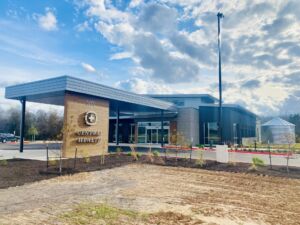 CommUnityCare services at the mobile clinic and a temporary modular clinic in Hornsby Bend have served as a bridge while plans for new Eastern Crescent clinics were developed. Eastern Travis County celebrated the opening of the new Central Health Hornsby Bend Health and Wellness Center in Fall 2023. In December 2023, CommUnityCare Health Centers began providing patients in Hornsby Bend with family medicine, women’s health and lab services three days a week and has experienced a strong patient demand since opening. The Del Valle Health and Wellness Center is also expected to open in late 2024.
  “This recognition is a testament to the dedication and talent of our team members, who make our organization such a special place to work. We are committed to creating a positive and inclusive workplace culture where everyone can thrive, and this award is a validation of our efforts,” said CommUnityCare Vice President of Human Resources, Yomi Fabiyi. ”I look forward to continuing our journey of excellence and further enhancing our workplace for the benefit of all our employees and patients who we serve every day.”
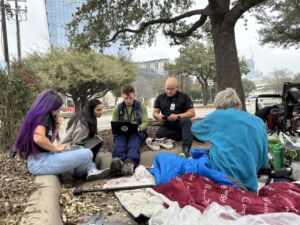 The first stop is a parking lot in downtown Austin, where the team encounters an older gentleman experiencing a new cough and shoulder pain. This is only the first of many stops throughout the day to help anyone facing barriers and unable to access healthcare at one of the 28 CommUnityCare Health Centers across Travis and Williamson County.
 Health is about more than visiting the doctor’s office. Adding small but significant healthy habits to your daily life will lead to big improvements in your overall health and wellness in 2024. Set yourself up for long-term success with these 6 tips for getting and staying healthy in the new year.
  “It’s really an incredible model, you’re drawing out of the parent and empowering them to harness what they already know and key into that maternal or parental instinct,” said Dr. Michelle Gallas, Pediatrician at CommUnityCare Health Centers. “So, the idea is that families form a community inside of the medical home.”
 Austin, TX –